SEM and PPC: The Smart Way to Get Instant Results in 2025
1. The Hook: Why Every Second Counts
Imagine launching a campaign today — and seeing your first lead by tomorrow.
That’s not a dream; it’s the reality of modern SEM (Search Engine Marketing) and PPC (Pay-Per-Click) strategies.
While SEO builds long-term visibility, SEM and PPC are the “instant engines” of the digital world, driving visibility, traffic, and revenue right now. Whether you’re running a startup in Dubai, managing an e-commerce business in London, or handling a global campaign, smart paid marketing can make your brand appear exactly when your customer is ready to buy.
In a fast-paced market like 2025, where consumer attention lasts less than 8 seconds — paid search campaigns aren’t just helpful; they’re survival tools.
2. What Are SEM and PPC — and Why They Matter in 2025
SEM is the umbrella term for paid visibility across search engines. PPC is the model that powers it — you only pay when someone clicks your ad. It’s the most measurable, controllable, and data-driven form of marketing available today.
In 2025, SEM and PPC are no longer about throwing money at keywords. They’ve evolved into precision tools, guided by AI analytics, audience intent, and smart bidding algorithms.
Google’s new automation features (like Performance Max and AI-driven audience signals) allow marketers to reach high-converting users at the exact moment they’re ready to take action.
For local UAE businesses, that means a restaurant in Jumeirah can compete with global brands — and a small service provider in Sharjah can rank beside industry leaders. For global brands, it means consistency across markets and measurable ROI.
Pro Tip:
Stop thinking of ads as “costs.” The smartest marketers in 2025 treat SEM and PPC as investments — every dirham or dollar spent creates actionable data that improves performance.
3. How SEM & PPC Deliver Real Business Impact
Let’s make it clear: SEO brings you long-term trust. But SEM and PPC bring you instant results — clicks, conversions, and cash flow.
Here’s a quick comparison between Organic SEO and Paid Search (PPC):
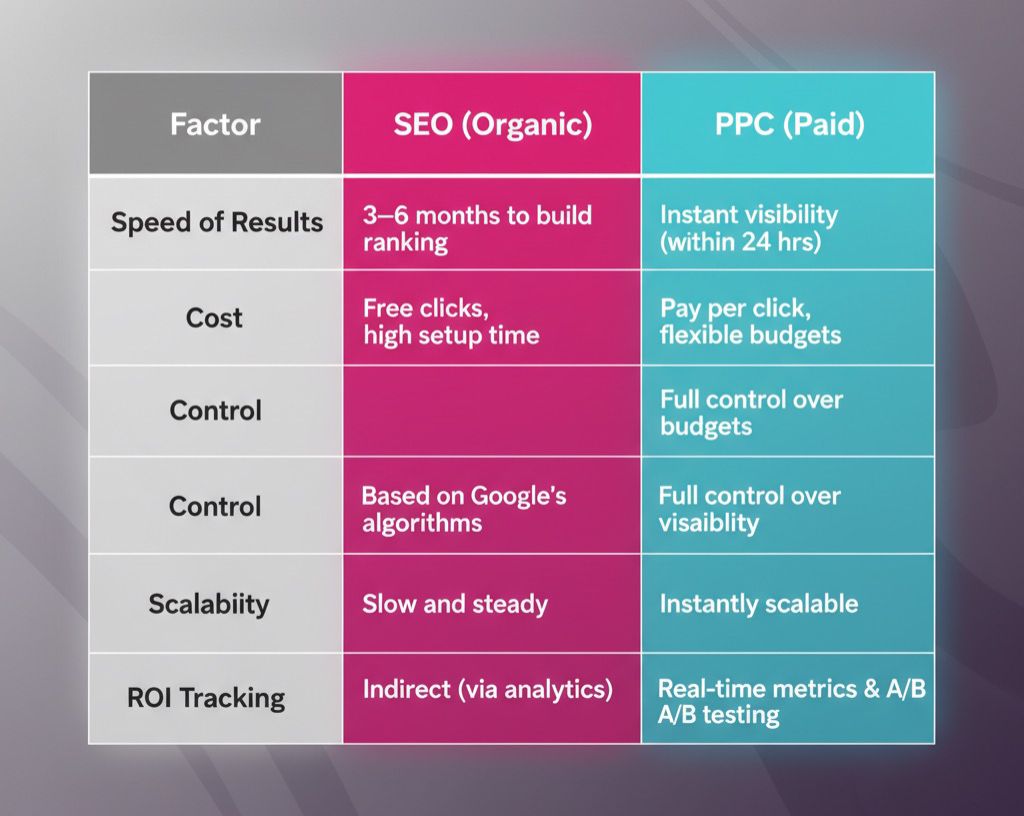
When executed correctly, PPC delivers ROI that’s visible within days.
According to 2025 digital benchmarks, every $1 spent on Google Ads returns between $4–$7 in revenue, depending on industry and targeting accuracy.
4. The 2025 Google Ads Strategy That Works
The new era of Google Ads is smarter and more intuitive — but also more competitive.
Here’s what’s working in 2025:
Smart Bidding + AI Optimization:
Let Google’s machine learning identify high-converting times, audiences, and devices.
Dynamic Search Ads (DSA):
Automatically match user searches with your website content — great for e-commerce and service businesses.
Geo-Targeting & Local Focus:
Dubai-based businesses using radius targeting (within 10–20 km) see up to 34% higher conversion rates.
Cross-Channel Retargeting:
Combine YouTube, Gmail, and Display to re-engage users who didn’t convert the first time.
Conversion Tracking + Analytics:
Measure everything — from clicks to calls to form submissions — and adjust budgets in real time.
Expert Insight:
Brands combining Google Ads with remarketing on Meta or LinkedIn report 2.4x higher ROI than single-channel campaigns. Integration is the new efficiency
5. The Psychology Behind Clicks
At the heart of PPC is human behavior.
People click on ads when three things align:
• Relevance – It solves their problem right now.
• Trust – The ad feels real, not “salesy.”
• Emotion – The message connects to desire or pain points.
Example:
A simple “Get Your Free Audit” ad performs better than “Hire a Marketing Agency Today.”
Why? Because it gives value first — and that’s how modern users think.
In regions like Dubai and Abu Dhabi, where consumers compare multiple options before buying, emotional micro-copy can boost CTR (Click-Through Rate) by up to 40%.
6. Mistakes to Avoid in Paid Marketing Campaigns
Even experienced marketers make these errors:
❌ Running campaigns without clear goals
If you don’t define conversions, you’re flying blind.
❌ Ignoring ad extensions
Sitelinks, call buttons, and review snippets drastically improve CTR.
❌ Not testing copy
A/B test everything — headlines, CTAs, and visuals.
❌ Neglecting mobile optimization
Over 70% of PPC clicks in the UAE come from mobile users.
❌ No follow-up strategy
Use remarketing emails and WhatsApp automation to convert “window shoppers” into real buyers.
Pro Tip:
The goal isn’t just traffic — it’s qualified traffic. Focus your spend on intent-driven keywords like “buy,” “book,” or “hire.”
7. The Smart Combo: When SEM Meets SEO
The best marketers don’t choose between SEO and SEM — they merge them.
Here’s how that synergy works:
• Use PPC data to identify which keywords convert best, then optimize your SEO pages around them.
• Run remarketing ads to visitors from your organic traffic.
• Promote high-performing SEO blogs through low-cost Display ads for brand awareness.
This integrated approach creates what experts call the “Visibility Loop” — when users see your brand in both organic and paid results, trust doubles and conversions triple.
Quick Snapshot (2025 Averages):
- CTR for combined SEO + PPC presence: +36%
- Average conversion rate: +28%
- Average CPC reduction through optimization: −14%
8. Conclusion: Instant Visibility Meets Long-Term Growth
SEM and PPC are no longer optional tools; they’re strategic weapons.
For startups, they offer speed. For established brands, they offer data precision. And for agencies like yours, they offer measurable success stories.
The key is balance: run smarter campaigns, not just louder ones.
Let AI handle the automation, but keep your human creativity at the core — because ads that speak like humans always win.
Want to go deeper into search visibility?
Learn how SEO marketing helps you rank and build credibility over time.
👉 Read our full SEO guide here.